

























Project Hail Mary is the movie of the year.
The blockbuster hit, which stars actor Ryan Gosling, has become one of the most successful films of 2026. With a 94% on Rotten Tomatoes—and grossing 500 million since its opening weekend—it has captivated audiences and garnered star-studded reviews from critics and audiences alike.
The movie follows Dr. Ryland Grace (Gosling), a middle school science teacher shunned from the world of academia after a paper he wrote was ridiculed by other scientists. Grace wakes up with amnesia in a spaceship 11.9 light-years away from Earth, and he must understand and complete a longshot mission despite having no memories of his time on Earth.
Through a series of flashbacks, he realizes that he has been sent on to save Earth from a microbe called astrophage that has travelled to Earth’s solar system and consuming the sun’s energy output. The sun is slowly dimming, and scientists have calculated that the Earth will enter an ice age and millions will die within decades if nothing is done. Grace and his two deceased crewmates have been named humanity’s last hope against the sun-eaters.
This premise maintains a tense atmosphere and keeps the viewer hooked to find out what will happen next. After all, there’s only so much Grace can do alone, and just as things start to look bleak, we are introduced to a new character who has become a fan favorite.
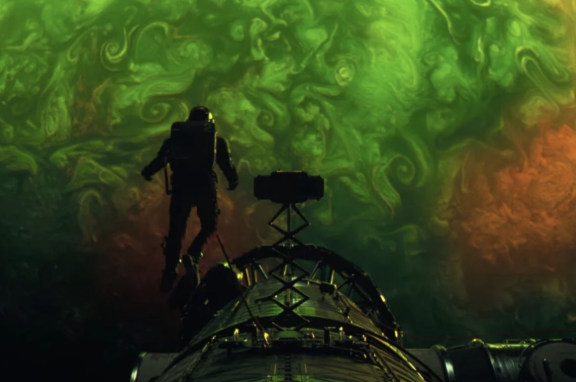
The film is based on Andy Weir’s bestselling 2021 book with the same title, and as someone who absolutely loved the book, I found the movie to be one of the most faithful book-to-movie adaptations I have ever seen. It brings the scenes I imagined in the novel into stunning visuals that took my breath away. In fact, none of the amazing images we see on screen were done in front of a green screen. Instead, the crew used sets and LED lights to create the images that have become some of the movie’s most stunning features.
One of the things that stood out to me the most was Gosling’s performance as Ryland Grace. He nailed the lovable and geeky scientist persona that Weir created, and he added a layer of depth and emotion to the character that makes audiences love him even more.
Another aspect of both the book and movie that I loved was how easy they were to understand. Often, when I read science fiction books, I end up confused halfway through, lost between the random mentions of niche science tools and impossible-to-imagine scenarios. This problem usually makes me steer clear of science fiction, but I’m so glad I ignored my gut instinct to read this book and watch the movie. The scientific core of the book is simple and explained clearly, making it an engaging and easy-to-watch film. As someone who doesn’t think of themselves as a “science person,” I found the science of this book relatively simple to understand, and the science didn’t interfere with my comprehension of the storyline.
To quote one of the most memorable characters in the film, both this movie and the book it is based on are “amaze, amaze, amaze”.