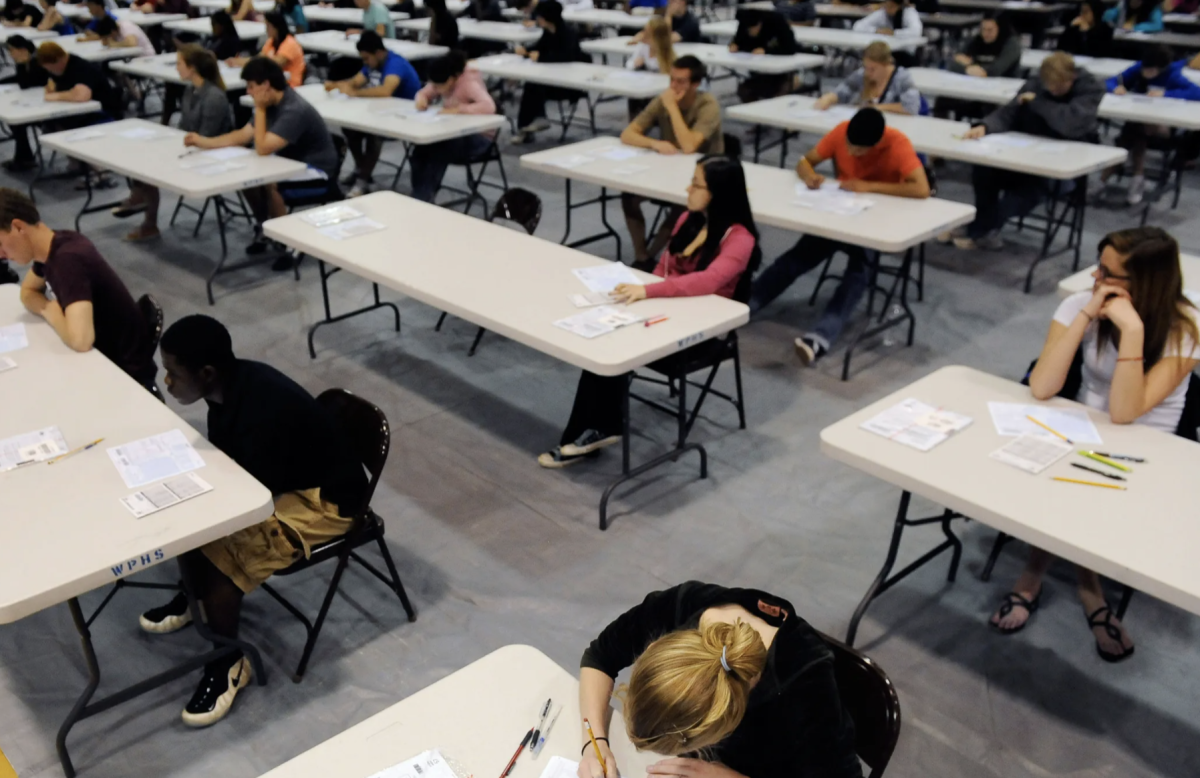
















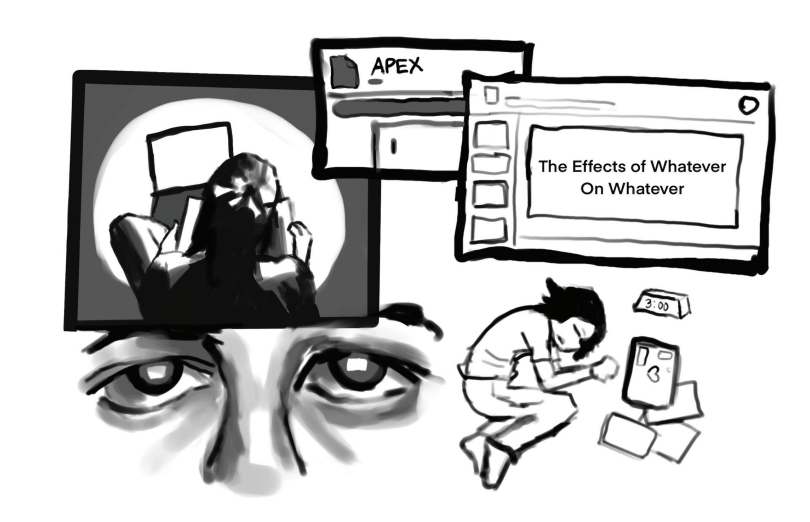



As May comes to a close, students across the country are recovering from another Advanced Placement (AP) exam season filled with sleepless nights, Alani drinks, and review packets.
At Chadwick, AP testing ran smoothly. Students showed up pumped and prepared to ace four-hour exams. Aside from the usual post-exam discussions and complaints about AP Physics 1 FRQs, the test season on campus concluded calmly.
Unfortunately, the same could not be said for many other schools across the country.
Over the past several weeks, schools nationwide have reported an almost unbelievable series of testing disruptions, cheating scandals, and revoked college acceptances.
While many of the incidents sound absurd, they also reflect the growing pressure surrounding AP exams nationwide. In fact, research published by the American Psychological Association (APA) found that student anxiety levels have risen dramatically over the past several decades. AP exam season has increasingly become an environment where some students are willing to risk nearly anything for a high score.
According to the tineocollegeprep TikTok account, which has released several AP exam-related videos in recent weeks, the chaos reportedly began during the year’s first AP exam, AP Biology, when a junior in New Jersey hired a 24-year-old nursing student look-alike to take the test. Just hours later, a student in Florida reportedly unleashed hundreds of cockroaches into an AP European History testing room, forcing students to evacuate mid-exam.
A day later, on May 5, a senior in California faked anaphylactic shock during the AP Chemistry exam in an attempt to avoid taking the test altogether.
But the biggest wave of incidents came during AP English Literature testing on May 6. A senior in California reportedly spat at a proctor after being caught using an unapproved laptop during the exam. In Florida, a junior attempted to use the world’s thinnest iPad Pro to access ChatGPT mid-test by flipping it up and down her actual computer screen. Meanwhile, a junior in New York reportedly used AirPods and voice-to-text features to generate essays with AI during the exam itself.
The AP Physics 1 exam on May 6 became embroiled in yet another major scandal when a valedictorian in Mississippi was accused of communicating with a former physics teacher through text messages during the test.
Then came AP Statistics on May 7. According to reports, a Florida student hid a phone inside a hallway ceiling before the exam, allegedly hoping the noise from incoming notifications would distract proctors enough to allow cheating inside the testing room.
All of these incidents occurred during the first week of AP testing. Week two only got worse.
During the AP Calculus BC exam on May 11, students in New York distributed cookies laced with laxatives during break time, while another student arrived wearing a custom-made jacket with formulas sewn into the fabric. During the AP English Language exam on May 13, a junior in Illinois hid a phone inside her hair before accidentally dropping it and waking a sleeping proctor.
Meanwhile, in Florida, students taking AP Spanish Language on May 14 attempted to disable the school Wi-Fi by flipping random circuit breakers in the electrical room. Instead, they reportedly broke the school’s air conditioning system, leaving students sweating through the remainder of the digital exam while administrators rushed to fix the building.
And in what may be the strangest headline of the entire testing season, several AP Psychology students from Florida reportedly had their scores canceled after leaving the testing area during the designated break to help save a dog being attacked by an alligator.
Although most students at Chadwick spent AP season stressing over FRQs instead of sabotaging the school’s air conditioning system, these incidents serve as a reminder of how intense the culture surrounding AP exams has become.
As college pressure and competition accumulate, students are increasingly treating AP exams as life-defining events rather than what they actually are: a few stressful tests.
While many of this year’s incidents were undeniably absurd, they reveal the growing academic pressure students face nationwide and the increasingly risky decisions some students are willing to take in response.