
















In March of 2026, several allegations of sexual abuse came to light against the late American labor rights leader Cesar Chavez. While only uncovered recently, these stories from different women occurred over the course of several decades.
Cesar Chavez, who passed away in 1993, was a labor activist who co-founded the United Farm Workers (UFW). He used nonviolent approaches to advocate for higher wages and safer working conditions for migrant farm workers, his most famous initiative being the Delano Grape Strike, which successfully forced California growers to make contracts with the UFW.
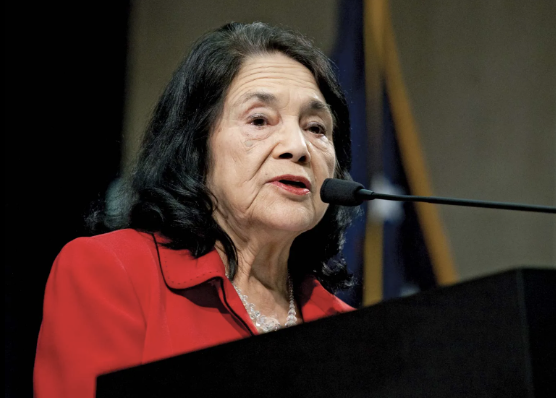
One of the women to come forward with allegations against Chavez is Dolores Huerta, a famous American labor leader who co-founded the UFW with Chavez. On Mar. 18, Huerta issued a statement in English and Spanish in which she explained that Chavez had coerced her into having sex with him during two separate encounters in the 1960s and 70s. Both encounters resulted in pregnancies that Huerta kept secret. After the children were born, Huerta decided to place them in the care of other families who “could give them stable lives.”
Three other women also came forward with their stories. Ana Murguia and Debra Rojas, both of whom are now 66, revealed to the New York Times that they were groomed and sexually abused by Chavez from 1972 to 1977, starting when Chavez was 45 and Murguia and Rojas were only 12 and 13.
Murguia stated that she was summoned dozens of times to Chavez’s office during this time. Both Murguia and Rojas were children of organizers who worked alongside Chavez, who had known Murguia since she was 8. Chavez allegedly used his close relationship with Murguia’s parents to his advantage to frequently invite Murguia to his office and assault her. As a result, Murguia states, she attempted multiple times by the time she was 15 to end her life. When Rojas was 12, she was invited by Chavez to a motel during a march through California and forced to have sexual intercourse with him.
Similarly, Esmeralda Lopez shared her story of an encounter with Chavez that happened in 1988, when he was 61 and she was 19. While she was working at the union health clinic, Chavez invited Lopez to travel together to an event in Michigan. Lopez shared that during their time traveling together, Chavez told her that he could get something named after her if they slept together. However, she refused. Soon after this encounter, Chavez fired her from her job.
These four women decided to come forward with their stories only recently because of their fear of undermining the movement Chavez helped lead. At that time, those who were close to the women advised them not to report him, as it was an incredibly dangerous and vulnerable time for Latino immigrants.
Huerta stated that when was raped in 1966 by Chavez, she believed that nobody in the organization would believe her story. She describes her being constantly hurt by him and recalls Chavez always humiliating and berating her.
Responses to the recent allegations against Chavez have been mixed. In California, Governor Gavin Newsom signed Assembly Bill 2156, renaming Cesar Chavez Day to Farmworkers Day. Across the United States, several monuments or murals dedicated to Chavez have been covered up or taken down. At Fresno State University, a statue of Chavez was covered on Mar. 18 and subsequently removed. The statue and murals at the Cesar E. Chavez Memorial in San Fernando was also covered. Many cities and organizations are scrambling to rename streets and plazas dedicated to Chavez. Additionally, the current leaders of the UFW immediately cancelled their celebration of Cesar Chavez day on March 31 following the allegations.
Still, some community members argue for the importance of acknowledging Chavez and his movement’s accomplishments, as he paved the way for significant labor rights for workers in the United States.