










“If she ain’t Asian, I ain’t chasin. If she ain’t ABG, I ain’t say’n a thing. If she ain’t squinting, I ain’t sprintin. If it ain’t rice, it ain’t nice. If my dog ain’t in danger, she a stranger. If she ain’t yellow, I ain’t sayin hello. If it ain’t noodles, I’m sayin toodles. If she ain’t foreign, she borin. If it ain’t sushi, it ain’t juicy.”
I have seen this comment many times under TikTok videos of East and Southeast Asian women. What does this say about how fetishization is so normal both online and in real life?
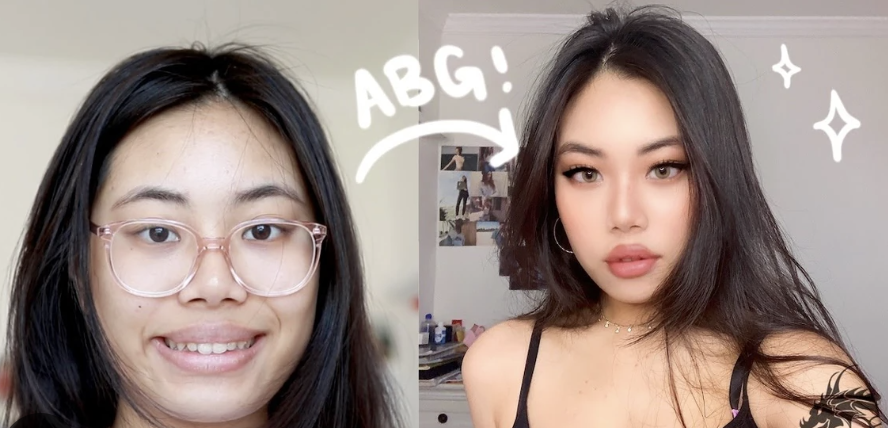
Most people have heard the term “ABG.” Coined in the ’90s, the term ABG, short for “Asian Baby Girl” or “Asian Baby Gangster,” was used to describe Southeast and East Asian women who hung out with gangsters or were involved in rebellious activities. These women defied the model minority myth in America, the harmful stereotype that labeled Asian Americans as smart, studious, and docile. Today, “ABG” is used loosely in reference to Asian women.
Online, I see a lot of comments on videos of East and Southeast Asian women that bring up their ethnicity with superficial names like “ABG” or “rice bunny.”
These interactions online directly influence how Asian women are perceived and treated in real life. Asian Americans have had a long history of being stereotyped and attacked, seen through multiple events like the COVID-19 pandemic, when Asian Americans were assaulted and harassed due to fear and hate. At the same time, Asian people have always garnered sexual fetishization from others due to the stereotypes that they are calm, obedient, and submissive. For a long time, the fetish that men had for Asian women was called “yellow fever.” Historically, this phenomenon is tied to Western perception of Asia during military involvement and produced stereotypes of how Asian women are sexually available, submissive, and subservient to white men. The use of “rice bunny” and “ABG” may seem like shallow descriptions of people, but they further perpetuate the objectification of Asian women and the sexual fantasies of their supposed meekness and submissive nature.
Asian women on social media willingly feed into these stereotypes and unknowingly uphold the very categorizations of Asian-American women that are used to marginalize and oppress them. These mindsets are used to allow and enable others to reduce Asian women to fetishes. Trends like these, even though they are used within Asian communities, have real world consequences and permit the harmful sexualization of Asian women.
Asian women are constantly dehumanized in the media and are portrayed as childlike, exotic, and mysterious. While many people may argue that harmless trends and songs have no impact on the perception of Asian women, these mainstream stereotypes still reinforce the one-dimensional framing of Asian women that directly affects how they perceive themselves.
Attraction to the stereotype of a race is still racism. These trends and terms used online only enable the harassment and sexualization of Asian women in real life. When brought to attention online, many say that it is just not that deep. I find it deeply upsetting to see that racial communities are allowing others to stereotype and sexualize them in order to deem themselves as acceptable.
Ultimately, I believe that Asian women, especially young Asian women influencers on social media, are pressured and confined into boxes upheld by dehumanizing stereotypes fueled by mass participation of others, especially men. In order to dismantle this historical fetishization, as well as the racism seen in other communities, we need to alter the perception of ethnicities in social media, educate others on the many harmful stereotypes, and create more accepting communities.