




















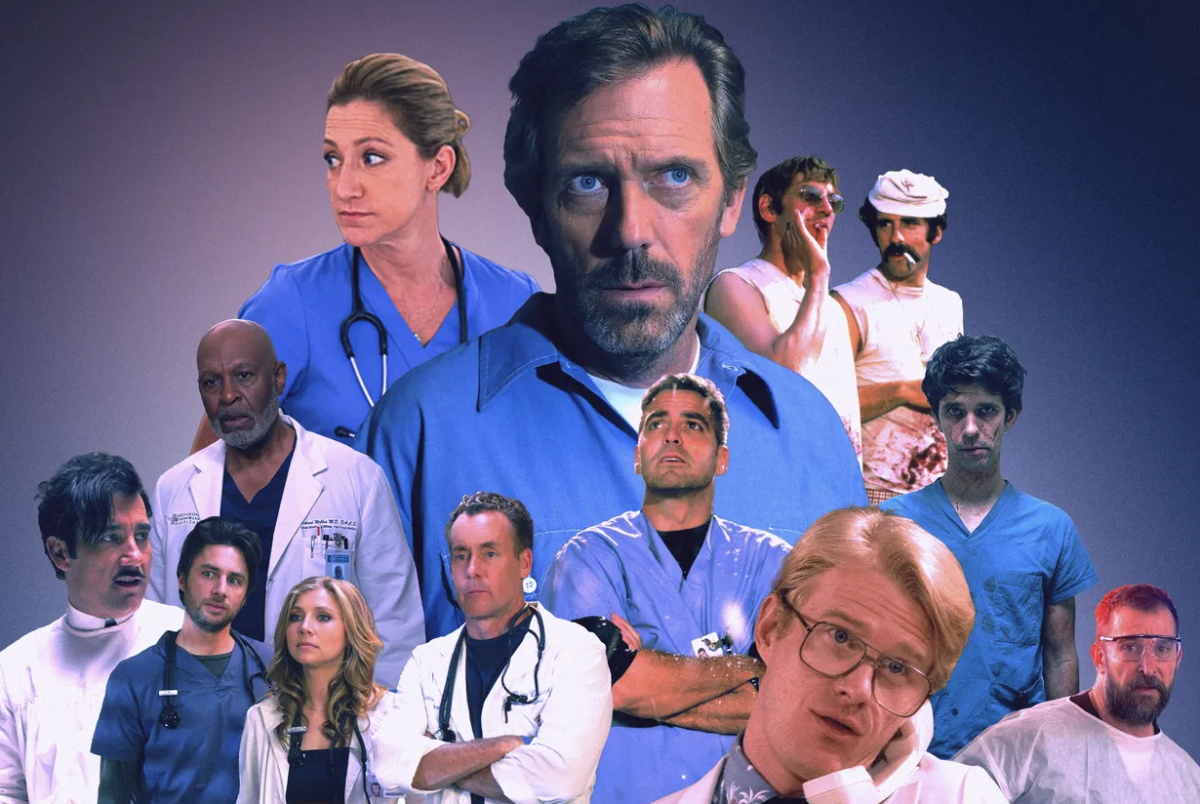
I love watching medical dramas. House is a favorite in my family, and we have spent many evenings watching with bated breath as House announces the one-in-a-million diagnosis and the surgery that will fix it all.
We also love the new drama The Pitt, which shows a much more real take on the lives of doctors and the stress involved with working in healthcare.
However, these shows show a dangerous, glorified version of the healthcare field that glosses over the struggles that exist even after a successful diagnosis.
In medical dramas, after undergoing risky surgeries, patients are shown as completely recovered and thriving.
They seem like they weren’t even sick in the first place. However, in real life this often isn’t the case.
Even The Pitt mostly focuses on the daily struggles doctors face.
There is almost no coverage of patients after their ER visits or surgeries.
According to the National Institutes of Health (NIH), anywhere from 43–64% of ICU admits experience new health issues after ICU admission. Up to 80% of ICU admits face cognitive impairment, and 50% deal with mental health conditions relating to their ICU visit.
Additionally, 59% of patients who have major, life-altering surgeries (such as those portrayed in medical dramas) deal with significant changes in their lives in the year after surgery.
Recovery is not a linear process, and survivors often deal with the difficulties of life not returning to how it used to be.
This problem is exacerbated by these medical dramas. By showing the patients’ lives completely returning to normal after their surgeries, these dramas are putting unreasonable expectations on both doctors and patients.
Doctors are expected to perform a “miracle surgery” that will completely fix their patient, and patients are expected for their lives and mental health to not be affected at all by their surgery.
In her 2024 New York Times guest essay, pulmonary and critical-care physician Daniela Lamas discusses the dangers medical dramas pose.
She describes a patient she treated who became paralyzed after a head injury and the process of his recovery.
Recovering for him did not mean that he would magically walk again, like so many patients on TV.
Instead, it meant his trying to breathe without the help of a machine and continuing to raise his kids.
She expounded on the dangers of the narrative medical dramas spread in her essay : “If we don’t tell stories like his—ones that are simultaneously hopeful and tragic—doctors and patients risk thinking that a life with severe illness or disability is not worth fighting for.
But there are so many ways to exist in the world, and I increasingly believe that it is impossible to make decisions about the quality of life for another individual.”
Perhaps a more beneficial—and more realistic—medical drama could not only show the care and work that doctors put into their patients but also the blood, sweat, and tears that happen after a successful diagnosis or surgery.
Getting to see patients continue to persevere, despite their lives not going back to normal, would help newly discharged patients.
It would show patients that life after surgery may be difficult, but that through perseverance, you can build a new version of normal.