






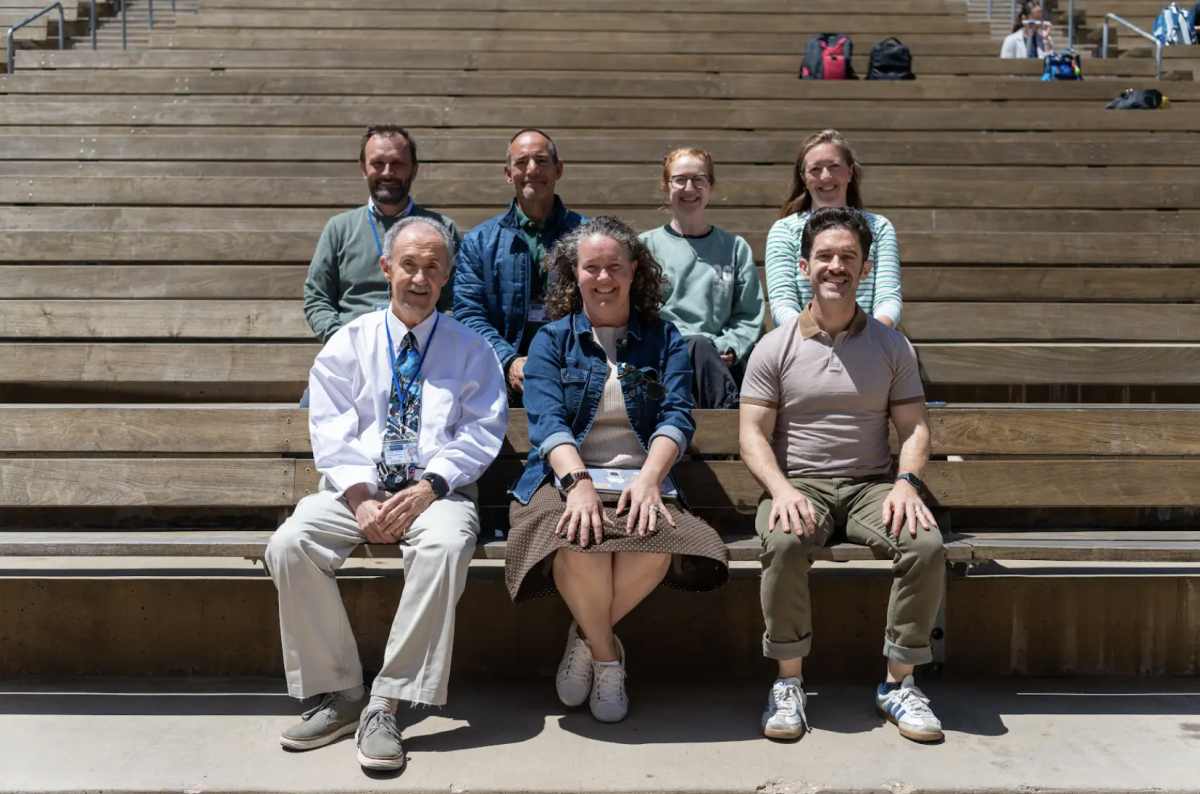
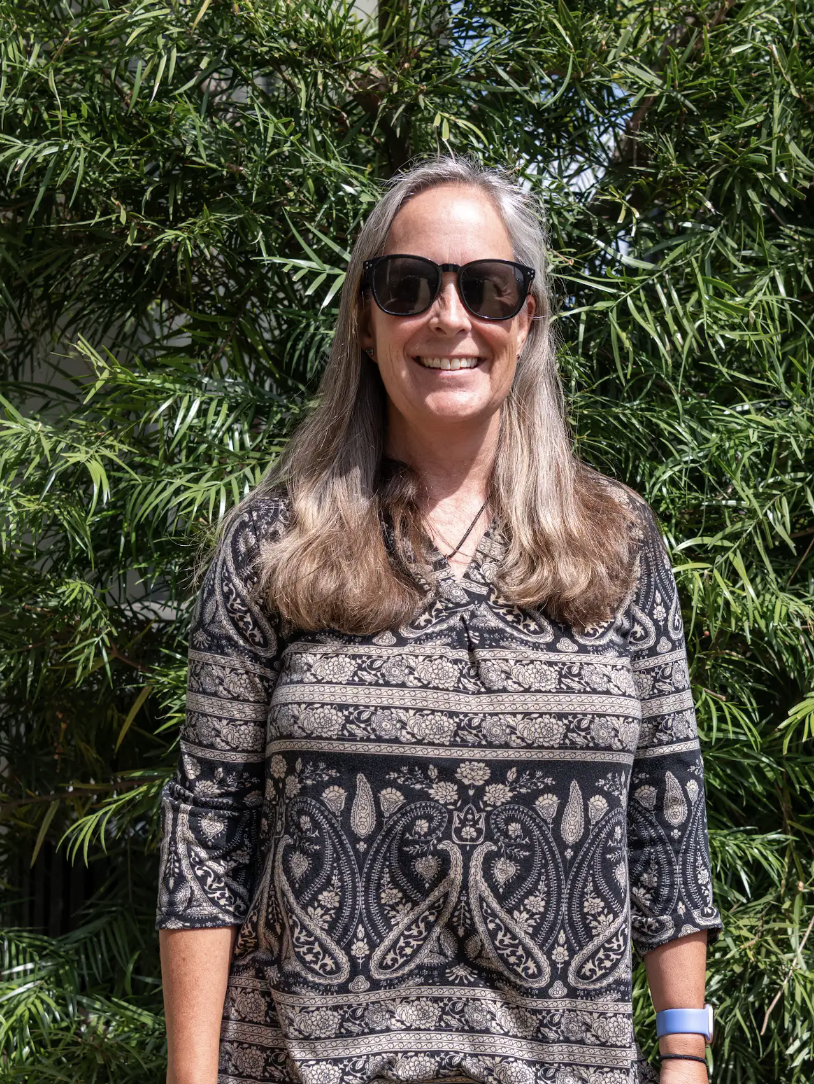
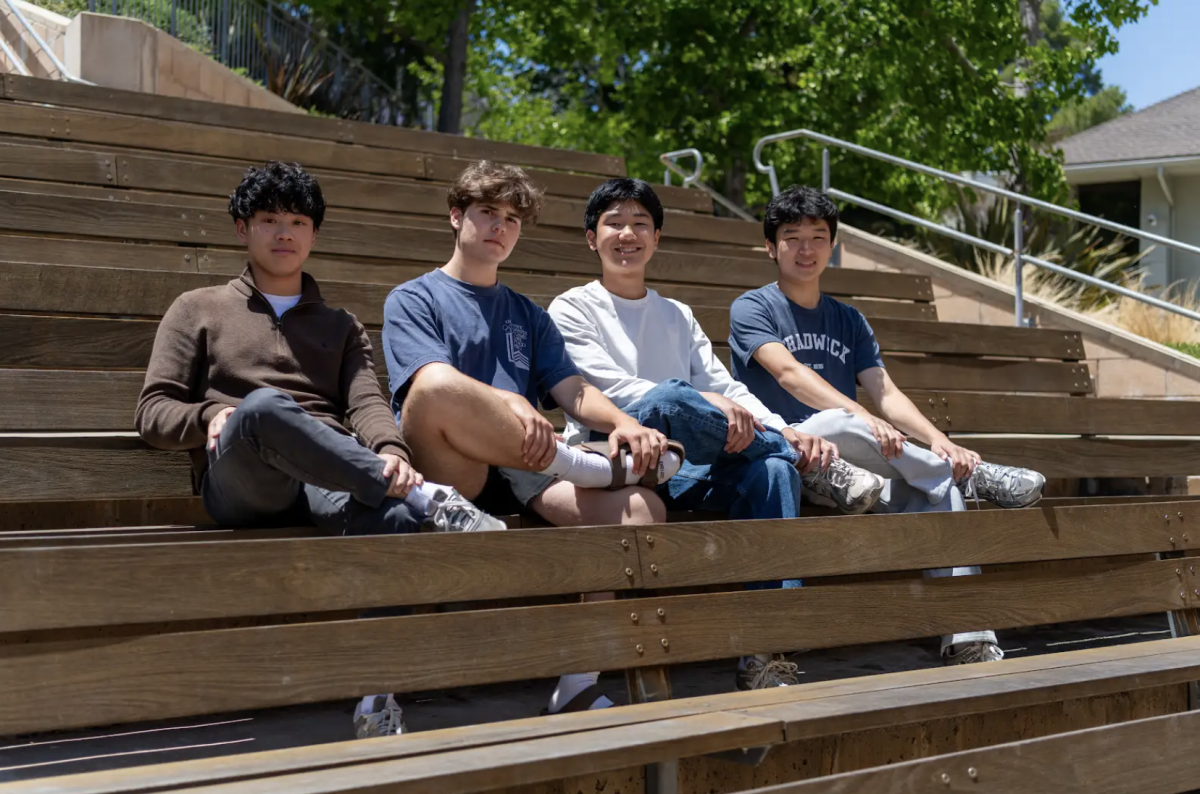
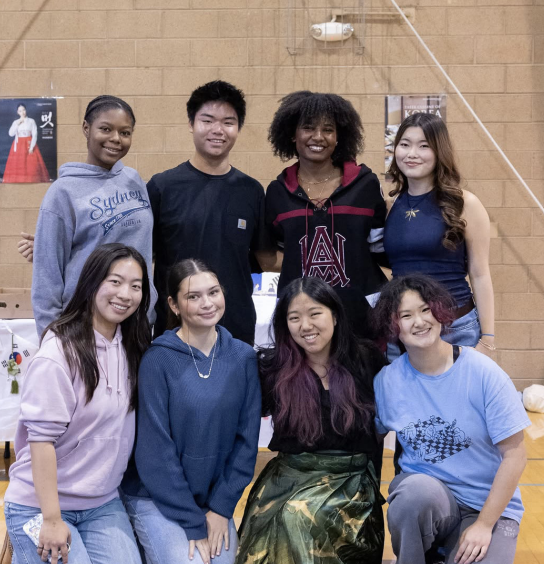

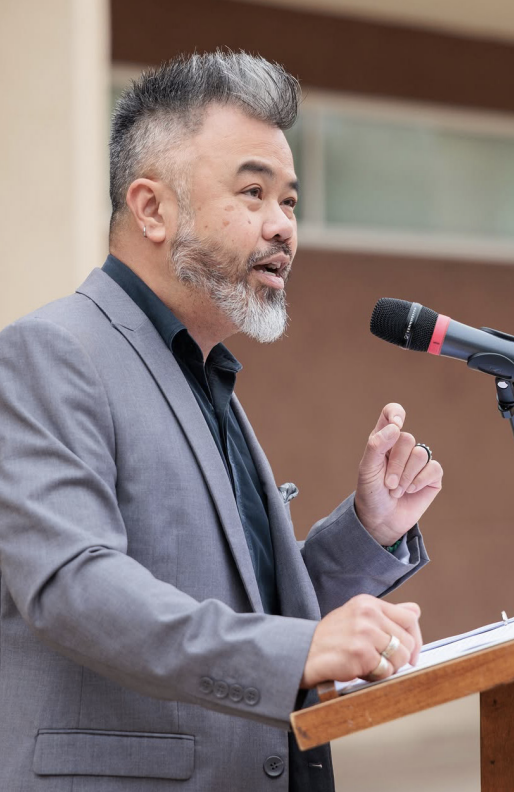
During this year’s Social Justice Series Opening Ceremony, guest speaker Phú Trầnchí, the head of school at TREE Academy, challenged the audience to list as many social identifiers as possible. As students paused to think, Trầnchí explained that every identifier they struggled to name is a reflection of their privilege. His message set the tone for this year’s Social Justice Series, emphasizing that conversations about justice should not be limited to a single day or event, but continue far beyond in each of our lives.
Dr. Marielle Sallo, Director of Community Engagement and member of the Equity Team, recalls, “The identifiers I remembered are the ones that I think about all the time. And then I was like, ‘Oh my gosh, those are the things that are in my world, that’s how I navigate this space.’ And there are other things that I don’t. So I felt like the message was something everyone could access.”
Crafted by the Student Diversity Council (SDC), the theme of this year’s Social Justice Series is “Justice Is…” Mia Cabrera ’26, co-chair of the SDC, explained why the council chose the theme: “ When I think about the theme that we selected for this year, there are so many things that can define it. For me, there isn’t a set definition for what justice is.”
The Social Justice Series kicked off with the schoolwide assembly in the amphitheater on March 4 that featured Trầnchí. Sallo and Head of School Jessica Donovan each spoke about the importance of creating a place where everyone has a sense of belonging, with Donovan emphasizing Margaret Chadwick’s vision of the school being a “dipperful of humanity.”
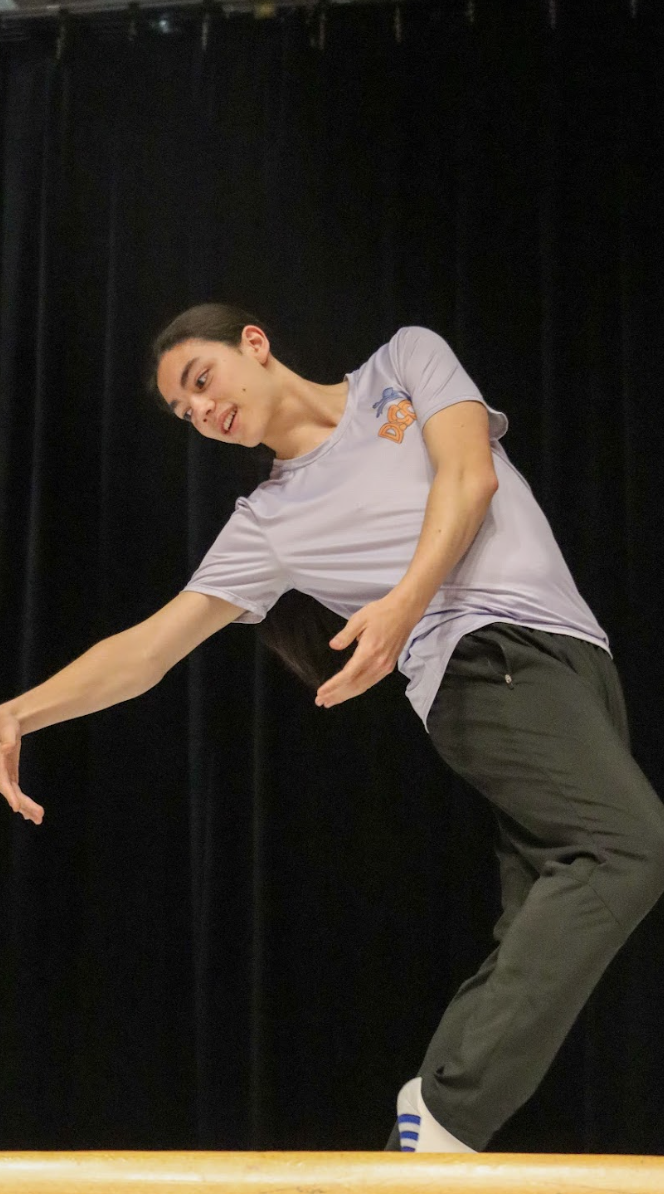
Their speeches were followed by a vocal performance of “We Shall Overcome” from the Village School students and a dance performance from the Upper Village and Middle School dance classes.
Student Diversity Co-Chairs Peyton Brantley ’26 and Cabrera then gave a speech about the importance of the Social Justice Series and the significance of the chosen theme “Justice is…” In their speech, they emphasized, “this day and those that follow mark a change in our community where taking action and practicing justice is not seen as mandatory but truly necessary.”
The assembly closed with Trầnchí, who spoke about his relationship with his name and his experiences balancing his Vietnamese and American identities.
The first round of workshops occurred a week later on March 10. All workshops, presented by students, faculty, and staff, spanned different topics like “Intersections Between Racism and Ableism,” “‘Love Thy Neighbor’: Religion’s Impact on Asian American Communities,” and panels hosted by the Black Student Union and the Multiracial Affinity Group.
After attending the “Fatphobia and Weight Gain Stigma” workshop, Kathryn Chen ’29 said, “Because of this year’s Social Justice Series, I am inspired to learn more about ways that justice can be brought to our community and how so.”
This is Chadwick’s sixth year of running these social justice workshops. But unlike previous years, this year the workshops will be held across the months of March and April, rather than on a single day.
“We didn’t want social justice to feel like it only happens on one day; it’s actually happening all the time,” explained Sallo. “It’s happening when you’re on the field. It’s happening on the stage in theater. It’s happening in the classroom. It’s happening in clubs. It’s happening in co-curriculars. So we wanted to make sure people understand this is happening all the time and not just one day, and that you shouldn’t opt out; you should opt in.”
“One of the biggest issues with Social Justice Day was the lack of participation we had across grade levels, and I think a lot of people didn’t really realize that day was important and the importance of having these conversations,” said Cabrera. “It was disappointing to see that a lot of people would take the day as a kind of rest day. I do think this series should be really helpful for getting more people to listen in.”
From next year onwards, the Social Justice Series will happen year-round. This year, the Social Justice Series occurred only in the second semester of the school year as a result of the lack of a DEI director at the start of the year. However, the Equity Team was behind the scenes, planning a Social Justice Series.
George Ramos, Upper School DEI Coordinator, explains, “I, with agreement from the Equity Team, decided we should do some kind of programming monthly. We brought it around to integrating it, integrating programming into days, into the middle of days. And so the students are here. They’re not missing school because they would be missing classes to get some social justice exposure.”
Ramos also added that, in the future, the school will hopefully continue to have social justice programming every month. This means that the opening ceremony will take place at the start of the school year, and every month, student workshops or assemblies with keynote speakers will take place.
“There’s no reason why a school with the core values that we have cannot enhance our programming around social justice,” Ramos said. “Every day is social justice day.”