
















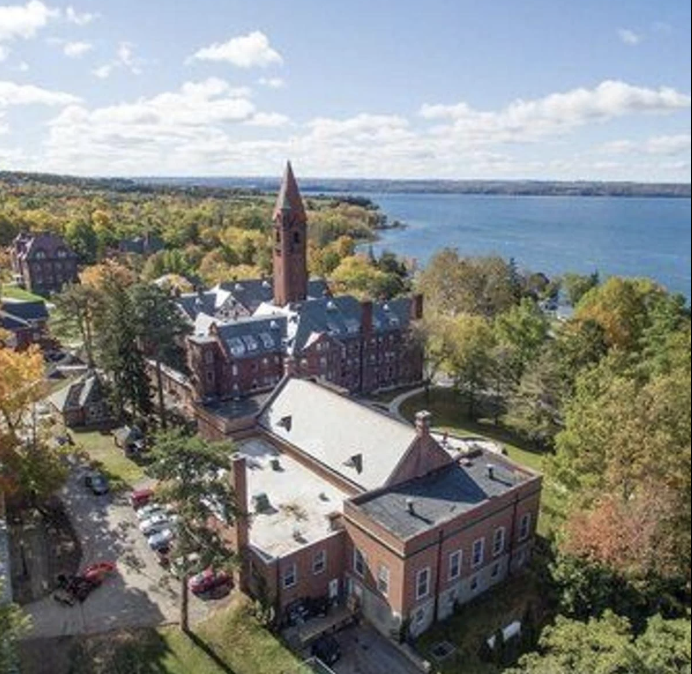
The boardroom at Wells College in Aurora, New York, felt colder than the February wind whipping off Cayuga Lake and rattling its 156-year-old windows. The CFO clicked to the next slide: “Projected Enrollment for Fall 2026.” The line on a graph depicting college enrollment plummeted like a stock chart during a crash. “We have eighteen months,” she muttered under her breath… “eighteen months to figure out how to survive with 15 percent fewer students.”
February 2025 saw variations of this scene playing out across the nation. At Marquette University in Milwaukee, for instance, administrators slashed $31 million from budgets in anticipation of declining enrollment.
This crisis has been years in the making, tracing back to the financial collapse of 2008, when young couples watching Lehman Brothers collapse on their television screens made a quick calculation: this isn’t the time to have children.
Due to economic uncertainty, Americans weren’t willing to make the investment of having children in 2008. They weren’t sure whether they would still have jobs the following year or whether the American financial system as a whole would collapse. Birth rates dropped significantly. And seventeen years later, that gap has caught up with American higher education.
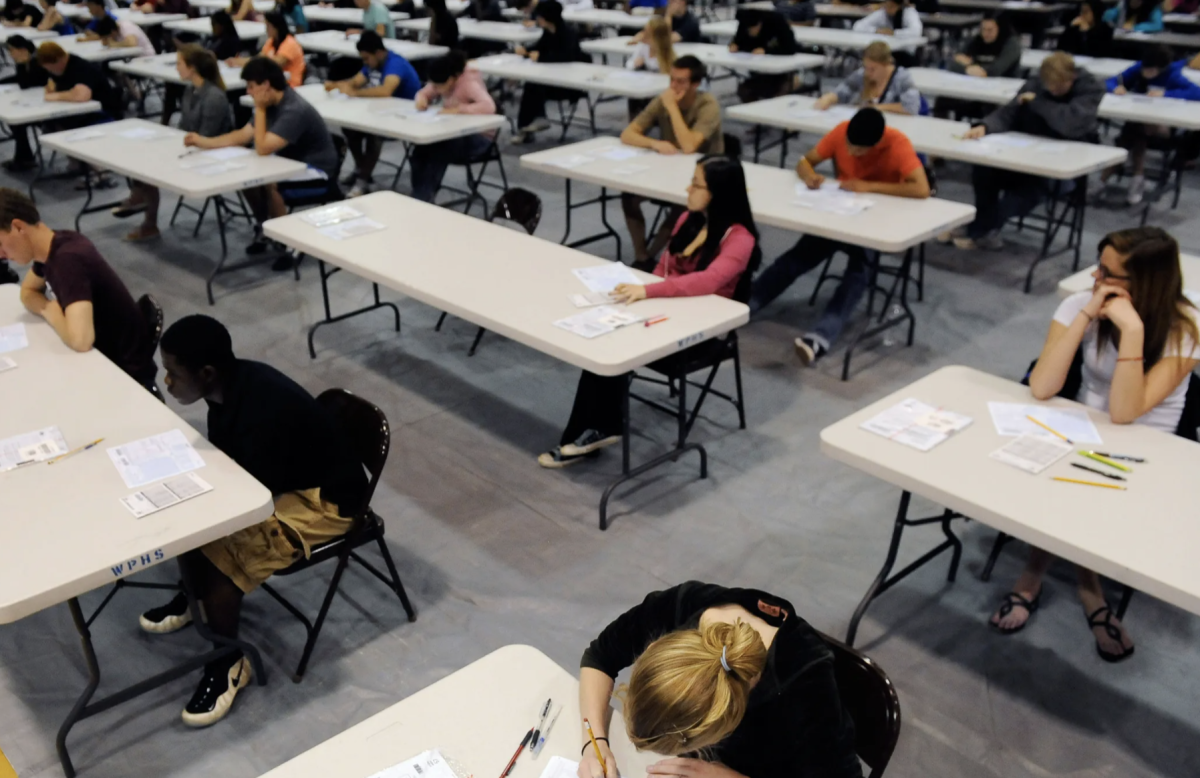
Due to consistently high levels of demand, elite institutions will barely notice the dip. Yale, Dartmouth, and Harvard will continue drawing far more applicants than they can admit, rejecting tens of thousands each year as they always have. But for small private institutions and regional public universities that depend on tuition, the coming decline in the number of college-age Americans represent a disaster represents a disaster.
At Wells College, administrators publicly emphasized rising retention rates and steady applications, “the narrative was always that everything was fine,” said Laura McClusky, a professor who taught at Wells for 23 years. However, in private, the numbers told a different story: “When the budget was presented to us, it was pretty grim.”
But blaming missing births misses the more interesting story. The graduating class of 2026 is entering an already weakened higher education system, due to decades of declining state funding, which has forced institutions to rely more heavily on tuition revenue. As the cost of attending state universities has risen sharply past an entry price that most households cannot front, attending the same universities that were once affordable now requires taking on substantial student loans, which are now ranked the U.S.’s second-largest category of consumer debt. As a result, fewer students are willing to enroll. Some prospective students even turn to Income Share Agreements: contracts that use students’ future earning potential for education financing, demonstrating that college financing no longer feels viable. For tuition-dependent colleges already facing a shrinking pool of applicants this year, the hesitation due to financing only accelerates closures and contractions across the higher education sector.
At the same time, colleges themselves have expanded during decades of apparent stability. Universities hired more administrative staff, opened satellite campuses in nearby cities, and bought downtown office buildings. Some went even further than just elaborate amenities, establishing full branches abroad. From NYU’s campus in Abu Dhabi to smaller American colleges setting up in Europe and Asia, campuses were built on the assumption that enrollment would always rise. When applications surged in the 1990s and early 2000s, this growth was a natural extension of predicted trends. But when tuition checks disappear, dormitories still need heat, faculty contracts are still binding, and that skyscraper on Saadiyat Island in Abu Dhabi still needs to be paid for. What once looked like ambition and the expansion of American education is now an overreach.
In the boardroom overlooking Cayuga Lake, the CFO closed her laptop. Outside, another winter storm was rolling in across the Finger Lakes. Inside, the committee began discussing which programs to cut first. By summer, Wells College would announce its permanent closure. Wells is one of many; an early casualty of a demographic shift the system wasn’t built to handle.