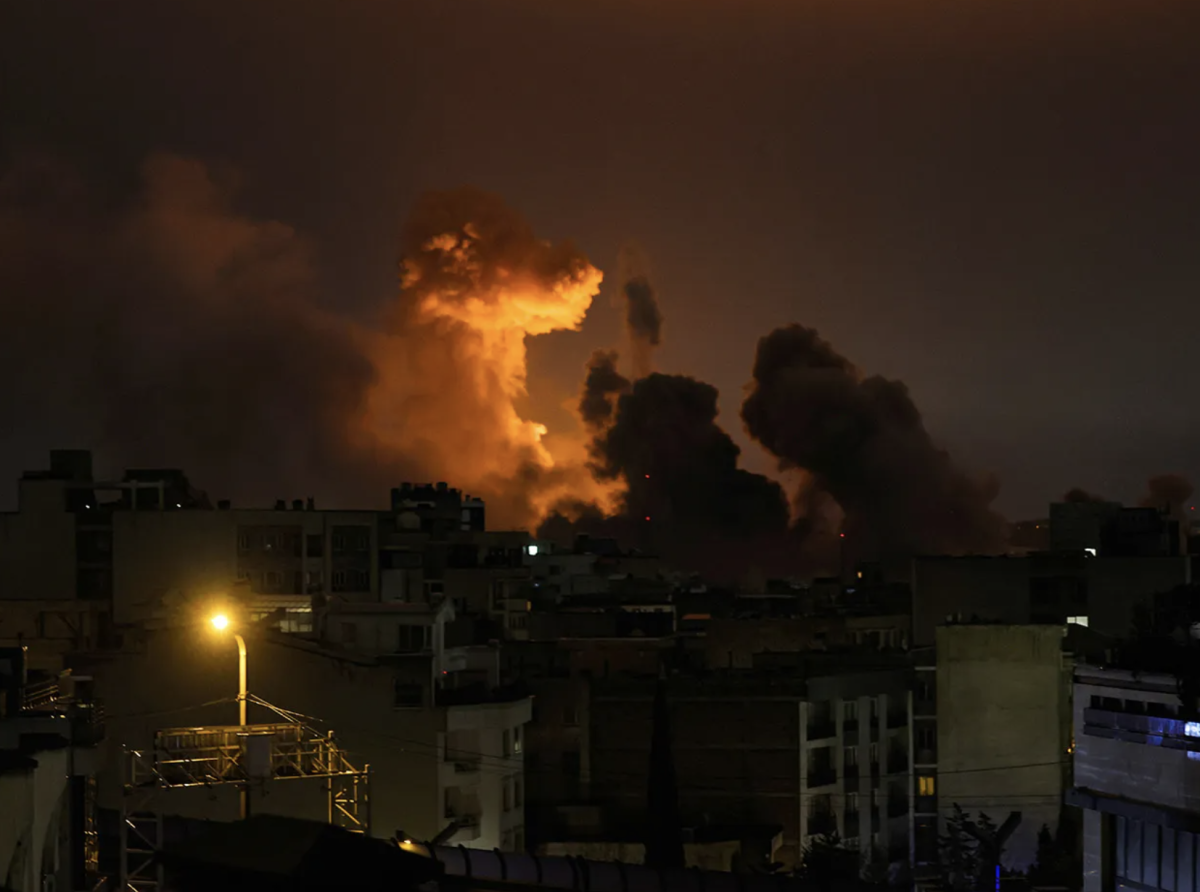









In the early hours of Jan. 3, on the orders of President Donald Trump, the United States Armed Forces in collaboration with the Drug Enforcement Administration (DEA) launched a raid in the capital of Venezuela and captured their President, Nicolas Maduro, along with his wife, Cilia Flores.
On Jan. 5, United States Ambassador to the United Nations Mike Waltz spoke to an emergency meeting of the UN Security Council, defending the US abduction and calling it “lawful.”
“The United States arrested a narcotrafficker who is now going to stand trial in the United States,” Waltz said.
“We believe a better future for the people of Venezuela and for the people of the region and the world is stabilising the region and making the neighbourhood that we live in a much better and safer place,” he added.
Immediately following the raid in Caracas, Maduro and his wife were flown to the United States, where they were processed at DEA Headquarters in Manhattan, New York, then detained at the notorious federal detention facility MDC Brooklyn, where other high-status detainees like accused murderer Luigi Mangione, alleged sex offender Sean “Diddy” Combs, and convicted wire fraud criminal Sam Bankman-Fried are also held.
On Jan. 5, Maduro and his wife made their first court appearance at the Manhattan Federal Courthouse, where they were charged with conspiracy to traffic cocaine, narco-terrorism, and weapons offenses.
The initial hearing lasted just over 35 minutes, where both Maduro and his wife pleaded not guilty.
“I am innocent. I am not guilty. I am a decent man … I am a kidnapped president,” a defiant Maduro said to 92-year-old presiding Judge Alvin Hellerstein.
Maduro, who has been widely accused of being a dictator, is known for dismantling democratic systems within his nation along with countless human rights and economic abuses, forcing millions to flee Venezuela. Outside the courthouse, crowds of Venezuelan-Americans broke out in celebration, eager to see the deposed president of their native country put behind bars.
In Maduro’s absence, Venezuelan Vice President Delcy Rodriguez was formally sworn in as acting president on Jan. 5. She condemned the actions of the Trump Administration, saying: “I come with sorrow for the suffering inflicted upon the Venezuelan people by an illegitimate military aggression against our homeland. I come with sorrow for the kidnapping of two heroes held hostage in the United States.”
By country, Venezuela has the largest oil reserves in the world at 303 billion barrels, with Saudi Arabia trailing at 267 billion barrels.
Trump highlighted the benefit of this change by promising that the money would benefit both Venezuelans and Americans.
“We’re going to be taking out a tremendous amount of wealth out of the ground, and that wealth is going to the people of Venezuela, and people from outside of Venezuela that used to be in Venezuela, and it goes also to the United States of America in the form of reimbursement for the damages caused us by that country,” Trump said.
The Trump Administration’s use of military force in a foreign, sovereign nation sparked debates regarding the legality and Constitutionality of the entire operation, with both Democrats and Republicans opposing the action.
On Jan. 4, Senate Minority Leader Chuck Schumer (D-NY) expressed outrage and warned the arrest could lead to an “endless war,” stating, “There is no authority … they did not just do ships off the water. They went inside Venezuela, bombed civilian as well as military places, and it’s a violation of the law to do what they did without getting the authorization of Congress.” Senator Rand Paul (R-KY) broke with his party, calling the action “war” and arguing that the initiation of war must begin in Congress, not with the President.
In a press conference held at President Trump’s Mar-a-Lago estate in Florida after the operation, Trump asserted that having the U.S “run” Venezuela was in both nations’ best interests.
Secretary of State Marco Rubio and Secretary of Defense Pete Hegseth have been directing policy in Venezuela and managing a U.S.-led “transition” policy to influence the country’s direction, and they have implemented a “threefold process” of stabilization, recovery, and transition, which includes military-backed “quarantine” of oil exports and organizing an interim government.
In the month following the removal of Maduro, Venezuela has faced widespread political uncertainty and mounting unrest.
Protests have erupted in Caracas and other major cities, with supporters of Maduro decrying what they call a foreign occupation, while opposition groups cautiously welcome the end of his rule but remain wary of U.S. involvement.
Internationally, several Latin American nations and European allies have condemned the raid as a violation of Venezuelan sovereignty, while others have stopped short of endorsement, calling instead for UN-led mediation and new elections.
Oil markets have also reacted sharply, with global prices fluctuating amid fears of prolonged instability in a country central to the world’s energy supply.
As the situation continues to unfold, questions remain over how long U.S. forces and advisers will remain involved and whether Venezuela can transition toward a stable, legitimate government.