


























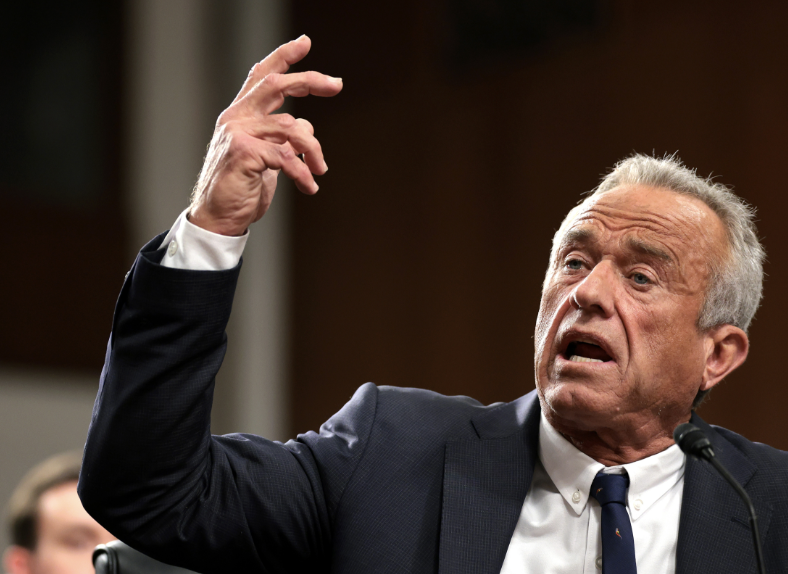
U.S. government health policies have been changing rapidly, including reduced vaccine recommendations, revised dietary guidelines, and withdrawal from the World Health Organization (WHO).
Under the leadership of Secretary of Health and Human Services Robert F. Kennedy, Jr., federal health officials announced in early January that the recommended number of routine vaccinations for children be reduced from 17 to 11.
These include immunizations for diseases such as rotavirus, hepatitis A and B, meningitis, and seasonal flu. The vaccines will now only be given to children after consultation with and approval from a health care provider.
The changes have been anticipated since December, when a presidential memorandum suggested adjusting the schedule to follow the “best practices” from “peer, developed countries.”
“President Trump directed us to examine how other developed nations protect their children and to take action if they are doing better,” Kennedy said. “After an exhaustive review of the evidence, we are aligning the U.S. childhood vaccine schedule with international consensus while strengthening transparency and informed consent. This decision protects children, respects families, and rebuilds trust in public health.”
Indeed, routine vaccination rates in young children have decreased while exemptions from school vaccination requirements for non-medical reasons have risen since the COVID-19 pandemic. Trends show increased vaccine hesitancy, skepticism, and declining trust in health authorities.
Medical organizations such as the American Academy of Pediatrics and the American Medical Association openly criticized the changes, claiming they are not based on scientific evidence and will be harmful to the public. Several have sued the Department of Health and Human Services in an attempt to block the recommendations.
Meanwhile, the federal Advisory Committee on Immunization Practices (ACIP) that reviews vaccines also suggested it would be looking into other practices such as the use of aluminum salts in shots, which enhance immune response.
Routine vaccines for diseases like measles, polio, and whooping cough are still recommended, but ACIP chair Dr. Kirk Milhoan expressed in late January that shots inoculating against measles and polio should be optional.
Citing personal rights to reject a vaccine, Milhoan said, “It’s been very important to us members of the committee that what we are doing is returning individual autonomy to the first order, not public health.”
He argued that improvements in sanitation and medicine provide a different context than in the past when the vaccines were developed, minimizing the threat of the diseases.
Other changes are reflected in new dietary guidelines from Kennedy, featuring a flipped food pyramid that prioritizes eating more red meat, cheese, and whole milk.
The guidelines, which inform food service in schools, hospitals, prisons, military bases, and government assistance programs, are updated every five years but rarely undergo substantial updates.
“My message is clear: Eat real food,” said Kennedy, quoting the new pyramid’s slogan.
An emphasis is placed on higher protein and vegetable and fruit intake, strictly advising against added sugars and processed foods, including carbohydrates such as white bread, flour tortillas, and crackers.
Since November, Kennedy and other health officials have stated the new guidelines would end the “war on saturated fats” by encouraging consumption of foods high in saturated fats, such as red meat, full-fat dairy products, butter, and beef tallow.
Reception has been mixed: some experts praise the focus on whole foods but debate the increased protein recommendations. The American Academy of Pediatrics and the American Medical Association supported the release, even though both criticized the updated childhood vaccine policies in the same week.
Not long after, the U.S. finalized its withdrawal from the WHO, a year after President Trump signed an executive order explaining the decision was made due to the organization’s “mishandling” of the COVID-19 pandemic.
The executive order stated that the WHO failed to adopt urgently needed reforms and was unable to demonstrate independence from inappropriate political influence by member states.
Officials from the Department of Health and Human Services have stated that the U.S. will continue to be a leader in global public health, with plans in place to work with other organizations to fill the gaps.
Overall, recent policy changes highlight the debate over vaccines and health in the United States and the uncertainty ahead over future developments and their implications.