




















Ask any baseball fan who the best team in Major League Baseball (MLB) is, and they won’t think twice about the answer. After the Los Angeles Dodgers won back-to-back World Series championships, nobody could see how such a dominant team could become even better.
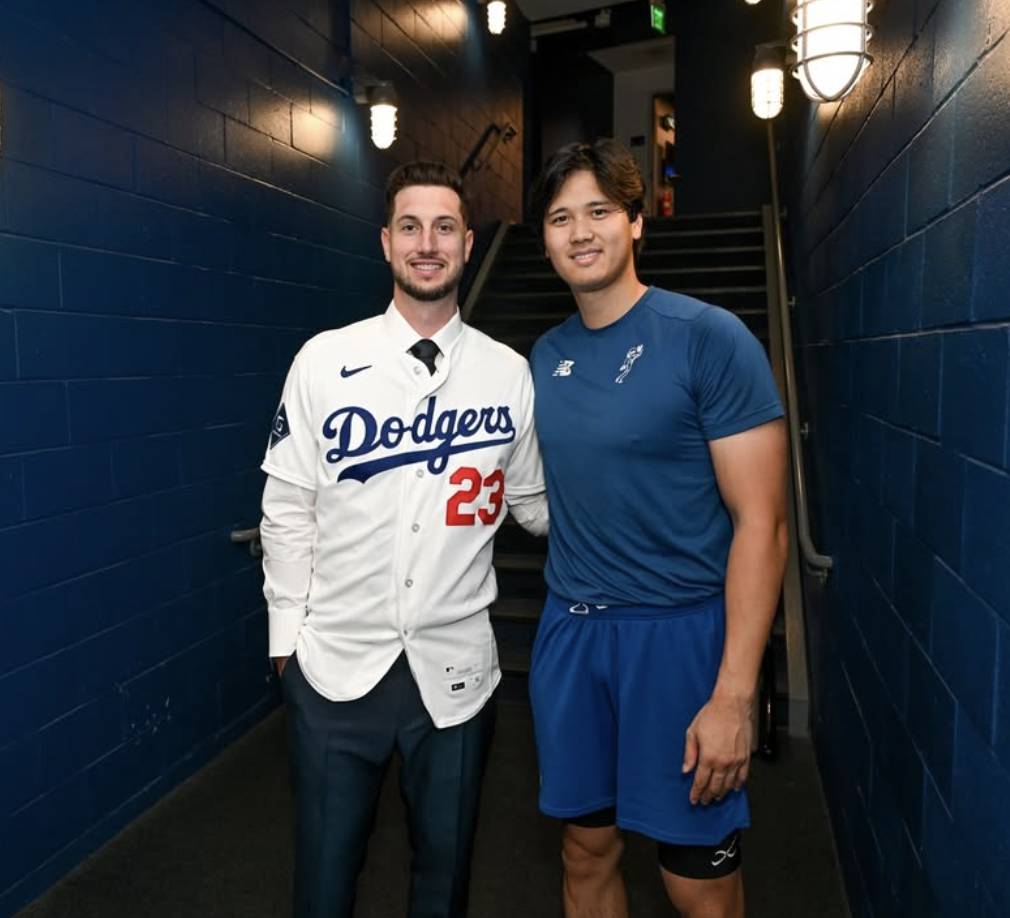
Then on Jan. 15, the Dodgers signed right-fielder Kyle Tucker to a four-year, $240 million contract. Tucker was regarded as the most highly sought after player in free agency this MLB offseason, and his skill in the outfield strengthens one of the only minor weaknesses for the Dodgers.
Tucker is now the 13th All-Star on the Dodgers. He’s the eighth player on the team to sign a contract worth over $100 million. No other team has more than six players with $100M+ contracts.
The Dodgers’ projected payroll for the 2026 season is now $573 million—-more than the Miami Marlins’, Tampa Bay Rays’, Cleveland Guardians’, and Chicago White Sox’s payrolls combined.
With this huge disparity in spending, the outcry for a league-wide salary cap has only grown. A salary cap would limit the money a team could spend on players’ salaries, theoretically evening the playing field for small-market teams.
Those in favor of a salary cap argue that the Dodgers’ level of spending makes the league unfair and, by extension, unentertaining. They complain of young stars becoming faces of small-market franchises before a bigger team poaches them.
The Dodgers have done this in the past, most notably with their first baseman Freddie Freeman.
Freeman spent the first twelve years of his career with the Atlanta Braves, winning an MVP in 2020 and a World Series championship in 2021. When Atlanta couldn’t pay the star due to concerns about his age, the Dodgers swooped in, paying $30 million more than what the Braves offered Freeman.
This story, and the many others like it, push owners to call for a salary cap. But in their pursuit for parity, the MLB’s biggest obstacles are the players themselves.
The MLB Players Association (MLBPA) has vehemently pushed back on a salary cap for decades. They argue that, by adding a cap, owners will pay players less than their worth while pocketing extra revenue.
The most public outcry came from Philadelphia Phillies star Bryce Harper in July 2025, when he told league commissioner Robert Manfred to “get the f*** out of our clubhouse” after Manfred tried to discuss the proposition in a meeting with Phillies players.
Harper is a flashy example of the opposition that players have held against a salary cap since 1994, when the idea first came up.
In a famous dispute between the league and the MLBPA, league owners proposed the creation of a salary cap in light of growing financial concerns.
In response, the MLBPA started a lockout that lasted 232 days. A total of 948 games were cancelled between the 1994 and 1995 seasons, including the 1994 World Series. Playing only resumed when owners struck down the proposed financial system.
A second lockout that lasted 98 days occurred in 2021, partly for the same reasons that it did in 1994. This 98-day lockout came after the expiration of the MLB’s Collective Bargaining Agreement (CBA), which is a five-year long contract signed by the MLBPA and league owners to ensure players’ rights are protected. Without a CBA, the league can’t operate.
The current contract expires on Dec. 1, 2026, and experts predict another lockout is on the horizon. If the Dodgers continue to dominate the league, the demand for a salary cap will almost certainly grow.
Even New York Yankees owner Hal Steinbrenner, whose team has the fourth highest payroll in the league, would be open to instituting a cap, according to sources from ESPN.
“Look, there are groups of fans out there in different areas, including my hometown in Tampa, that come to spring training games thinking their team has little chance of making the playoffs,” Steinbrenner said. “Those fans would argue that that’s not good for baseball as a whole. It’s a valid argument.”
The MLBPA’s relentless opposition makes the chance of seeing a cap slim.
For now, the Dodgers will enjoy another season of a star-studded roster that hopes to win three consecutive World Series titles–a feat that hasn’t happened since 2000.