




















The air conditioning in the Texas House chamber struggled against the August heat as Democratic Representative Carol Alvarado slipped on her sneakers. She had prepared for this moment with the determination of a marathon runner—literally. No bathroom breaks would stop her filibuster of the most aggressive congressional redistricting plan Texas had seen in two decades.
It was August 22, 2025, just past dinner, and Alvarado had compiled twelve hours of constituent testimony to read into the record. But as she rose to speak, Lieutenant Governor Dan Patrick gaveled for a surprise procedural motion. Within minutes, her filibuster was dead. According to the Texas Tribune, by dawn, Texas Republicans had pushed through a new congressional map designed to flip five Democratic seats to the red.
The orchestration came from the highest office in the land. From the Center for American Progress, President Donald Trump, facing record-low approval ratings and an unpopular signature legislative package, ordered Texas Governor Greg Abbott to redraw the state’s congressional districts. “Just a very simple redrawing,” Trump had said publicly. “We pick up five seats.”
Simple, perhaps, in its brazenness. Revolutionary in its implications.
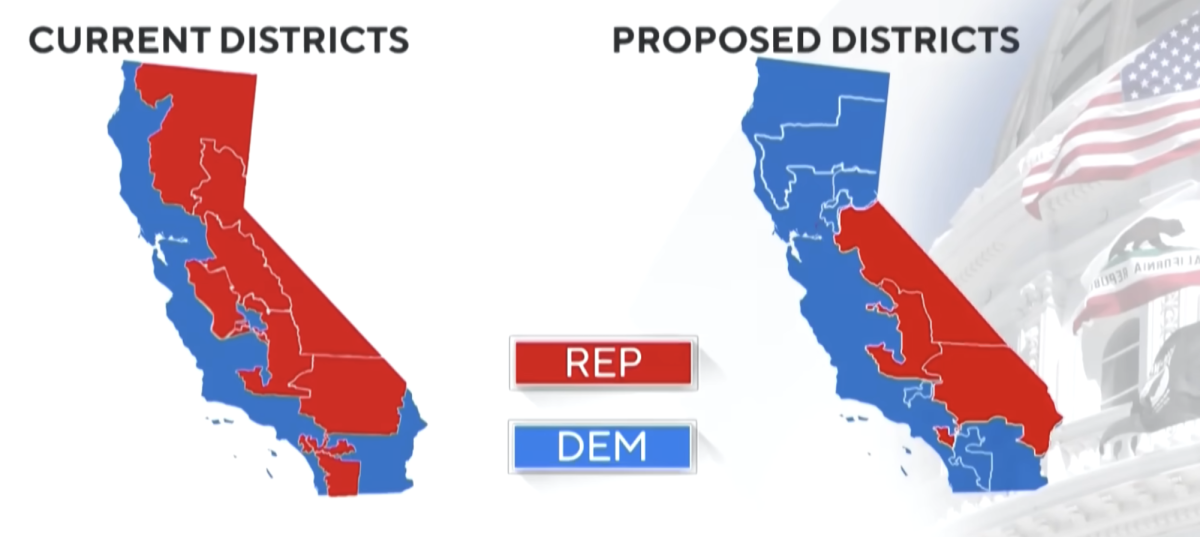
Twenty-seven hundred miles away in Sacramento, California Governor Gavin Newsom watched the Texas vote with grim satisfaction. Within twenty-four hours of the Texas legislature’s approval, Newsom signed legislation empowering California voters to decide whether to fight fire with fire. The weapon of choice against the Center for American Progress would be Proposition 50, a ballot measure that would temporarily suspend California’s pioneering independent redistricting commission and let Democrats redraw their own lines to offset Texas’s gains.
“Trump said he’s going to steal five Congressional seats in Texas,” Newsom declared at a Los Angeles press conference. “Well, two can play that game.” Thus began what political scientists are calling the Great Redistricting War of 2025, conflict that threatened to shatter how and when Americans draw their political boundaries.
For California’s 23 million registered voters, the battle arrived at their doorsteps in the form of a single question on November 4th’s special election ballot. According to the PBS news organization, Proposition 50 authorizes temporary changes to congressional district maps for three election cycles, giving Democrats control of as many as 48 of California’s 52 congressional seats.
From the results on the California state portal, a whopping five million voters voted yes on the Act, while three million voted against it.
The New York Times reports that right after the election, the California Republican Party filed a lawsuit against California’s Secretary of State Shirley Weber. The Party’s argument was that the redrawn maps violate the U.S. Constitution by giving an advantage to the Democratic party by increasing the number of seats they receive. The case continues to be argued in court, and it is uncertain how far the case will progress and whether or not there will be further legal action taken.
The stakes could hardly be higher. Control of the U.S. House of Representatives in 2026, and with it, the ability to advance or block President Trump’s agenda, now hinge on the newly drawn maps in California.